
Myth:
If nations were to go all-electric with their transport fleets, it would push up power prices, increase CO2 emissions and cause blackouts.
Fact:
It’s true that global demand for electricity would rise by between 20 and 25 percent if every car in the world were an EV, but this is exactly what is needed if we are to get emissions down.
In the United States, the Department of Energy found that an EV powered from the grid produces only 30 percent as much CO2e per kilometre as a petrol- or diesel-powered vehicle. If powered entirely from renewables, it produces only 6 percent of the CO2 of the legacy. As for electricity use, a 2025 study by MIT found that this would rise by 22.5 percent over the time taken to transition the nation’s vehicle fleet. Given that this transition would likely take as much as 20 years, the electricity grid would have to grow by a little less than 1 percent each year, given compound rates of increase. Such a transition would cut global emissions by about 10 percent, if carried out by all nations, making EVs one of the most important weapons in the fight against climate change.
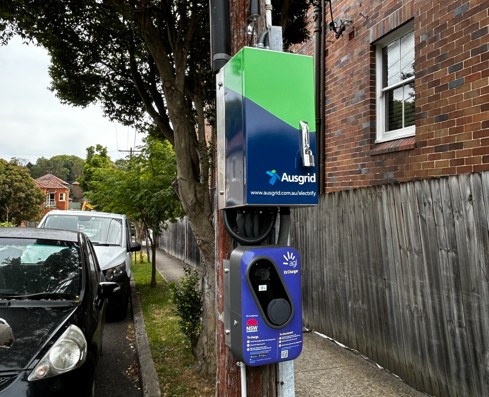
An EV charge point on a telegraph pole in Sydney’s inner west. [Source: Ken Enderby]
Sources:
“Are electric vehicles definitely better for the climate than gas-powered cars?” MIT Climate Portal, 13/10/22. https://climate.mit.edu/ask-mit/are-electric-vehicles-definitely-better-climate-gas-powered-cars
Saul Griffith, The Big Switch: Australia’s electric future, Black Inc, 2022.
Daniel Bleakey, “Tesla says global energy demand will be cut in half by switch to EVs and renewables,” The Drive, 26/4/23
International Energy Agency, “Road transport fuels,” Sheltering from Oil Shocks: Measures to reduce impacts on households and businesses, https://www.iea.org/reports/sheltering-from-oil-shocks/road-transport-fuels