
Myth:
If the world shifts to renewables, we will make it much harder for poorer nations to develop. This will sentence their populations to decades more poverty.
Fact:
This argument is completely disingenuous, as many climate sceptics are unconcerned about poverty in their own countries, let alone in developing ones. In fact, many developing nations have discovered that renewables are already cheaper than fossil fuels and are adopting them at a faster rate than richer nations are. The cost of renewables is actually much less for developing countries, as they don’t need to scrap existing fossil fuel plants. They can go straight to renewables as they develop.
Pakistan is a good case in point. In 2024, it spent 10 percent of its GDP on fossil fuel imports – almost all of which come through the Strait of Hormuz. Even before the US war with Iran in 2026, this was fuelling a massive wave of investment in rooftop solar. By the beginning of 2026, this was supplying almost a fifth of the nation’s electricity – up from just 4 percent in 2021 – and was reducing its imports of fossil fuels by about $12 billion a year.
Even so, it will still be necessary for richer nations to provide some funding to the poorest ones, to speed up the energy transition. This was agreed to in Paris in 2015 and at COP27 in Egypt in 2022.
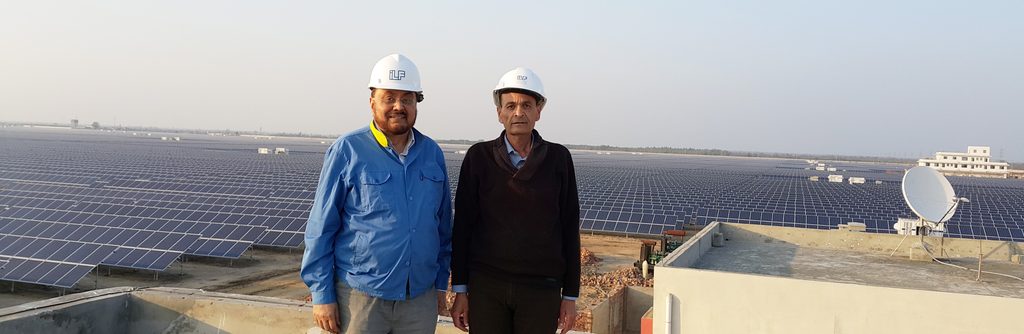
A solar farm in Pakistan. The nation has one of the fastest growing renewable energy sectors in the world. [Source: Wikimedia Commons]
Sources:
Chloé Farand, “How Pakistan’s people-led solar boom is easing impact of Middle East energy crisis,” The Guardian, 18/3/26
Gabrielle Kuiper, “Pakistan’s citizen-led solar rush: Where panels power education and health – and are gifted in dowries,” Renew Economy, 11/8/26