Myth:
China is using slave labour to manufacture electric vehicles, solar panels, batteries and other products necessary for the energy transition.
Fact:
Claims that China is using slave labour to manufacture electric vehicles, solar panels and batteries may or may not be true. The country has also been accused of using such labour for the manufacture of a host of other products. These include televisions, mobile phones, tablets, semiconductors, auto parts, textiles, clothing, toys and a range of foods. It’s entirely possible that just about everything made in China has some connection with slave labour.
The question is, why are products necessary for the energy transition being singled out, while all the others are ignored? The answer is that climate sceptics are not concerned with the issue of slave labour, only with that of renewable energy. If they really wanted to pressure China into cleaning up its act, they would boycott all products made there. But, of course, that is not what they are doing. They are quite happy to go on buying Chinese-made TVs and clothes and petrol-powered vehicles, irrespective of whether they are made using slave labour.
So, while we be concerned about the use of forced labour in China, we should not restrict our concerns to a particular set of products. Nor should we let our concerns interfere with the need to speed up the global energy transition.
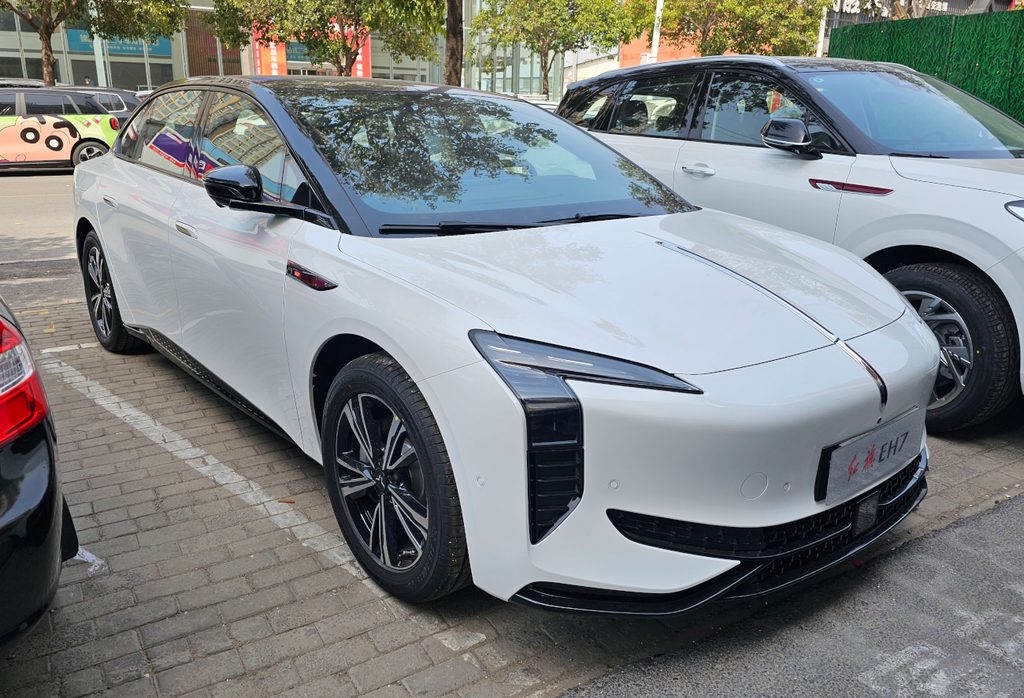
A Chinese-made electric vehicle. [Source: Wikimedia Commons]
Sources:
“China: 83 major brands implicated in report on forced labour of ethnic minorities from Xinjiang assigned to factories across provinces,” Business and Human Rights Resource Centre, 1/3/20
Nina Lakhani and Amy Hawkins, “China accused of scores of abuses linked to ‘green mineral’ mining,” The Guardian, 6/7/23
Matthew Summerville, “The Problems with Mass Manufacturing in China,” RenewCo Solar, 17/4/24
Bureau of International Labor Affairs, “List of Goods Produced by Child Labor or Forced Labor,” US Department of Labor, 5/9/24